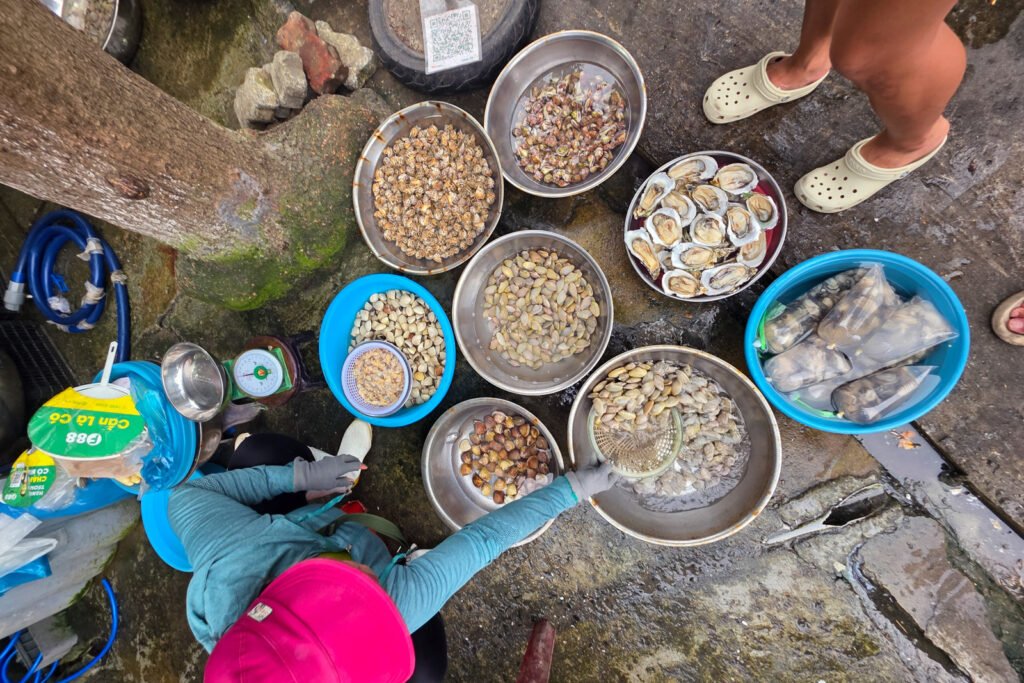
A few days ago, I was walking through Bac My An Market in Da Nang, Vietnam.
An ordinary local market.
Vegetables.
Fish.
Clams.
Oysters.
Cash changing hands.
People going about their daily routines.
Nothing particularly remarkable on the surface.
But standing there, looking down at the different stalls, I was reminded of something I’ve been noticing more and more over the last few years.
The world is full of systems.
Markets are systems.
Cities are systems.
Businesses are systems.
Families are systems.
Even the internet is a system.
Most people tend to focus on events.
A website loses traffic.
A business struggles.
A city becomes crowded.
A relationship changes.
An algorithm update rolls out.
But the event is usually the visible part.
The system is often where the real story lives.
The longer I work in digital marketing, AI-driven discovery, and online business, the less interested I become in isolated events.
I’m more interested in the forces underneath them.
What incentives are driving behavior?
What patterns keep repeating?
What conditions make certain outcomes almost inevitable?
Living as a nomad has probably reinforced this perspective.
Different countries.
Different languages.
Different cultures.
Different technologies.
Yet many of the same underlying patterns appear again and again.
People respond to incentives.
Communities organize themselves.
Markets find equilibrium.
Systems adapt.
The details change.
The patterns often don’t.
Standing in that market in Da Nang, watching people buy and sell seafood, chicken, and vegetables the same way they probably have for years, it struck me that some of the most valuable lessons about modern technology, AI, and business don’t always come from staring at a screen.
Sometimes they come from stepping away from it.
And simply paying attention to the systems already operating around us.
Because individual events tell us what happened.
Systems often tell us what happens next.