Over the past few months, I’ve noticed something interesting.
The better AI becomes at creating convincing content, the more interested I become in things that clearly weren’t created by AI.
A slightly blurry photograph.
A voice that hesitates.
Someone searching for the right words.
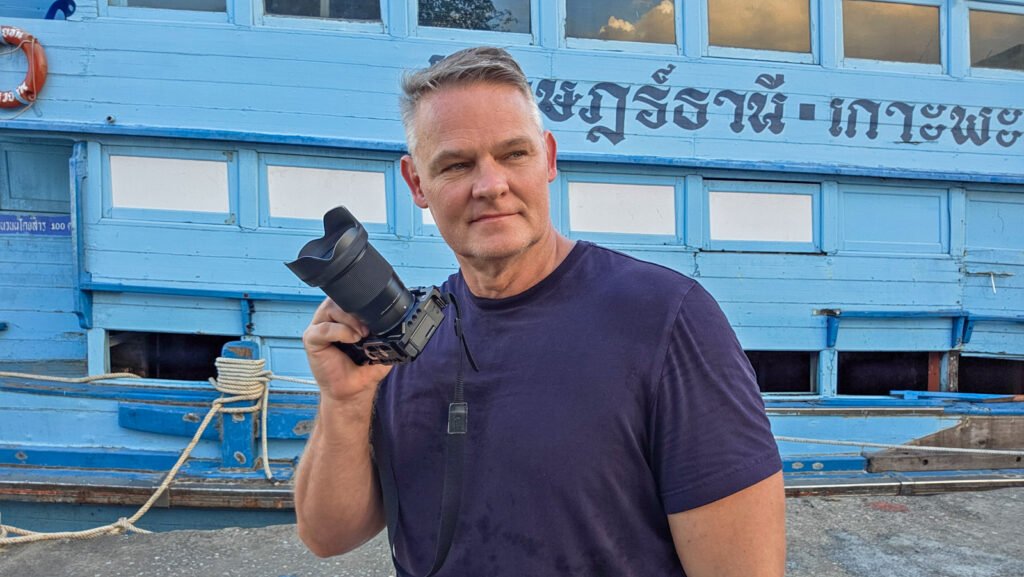
A camera that was actually there.
At first, I thought this was just a personal preference.
I’m starting to think it’s something bigger.
For years, technology has made it easier to create things that look real.
Digital cameras replaced film.
Filters replaced imperfections.
Editing software removed mistakes.
Now AI can write articles, generate photographs, clone voices, create podcasts, and even invent people who never existed.
The quality is improving almost weekly.
Soon, most of us probably won’t be able to tell the difference.
Ironically, I don’t think that’s the biggest story.
The bigger story is what happens to us.
As artificial content becomes abundant, authentic experience becomes scarce.
And scarcity has always changed what people value.
A blurry photograph taken by someone who actually stood there may become more meaningful than a perfect AI-generated landscape.
A video with imperfect lighting may feel more trustworthy because people know it really happened.
A conversation with pauses, uncertainty, and the occasional awkward sentence may carry more weight than a flawlessly generated script.
For years, the internet rewarded polish.
It may soon begin rewarding evidence.
I’ve noticed something similar in my own life.
Over the past year, I’ve become much more interested in photography.
Not because I wanted another camera.
Not because I needed another hobby.
Because carrying a camera changed the way I experienced the places I was already visiting.
Instead of walking through a market with my phone in my pocket, I started slowing down.
I noticed how the light changed during the afternoon.
I found myself waiting instead of rushing.
Watching people rather than simply passing them.
The camera wasn’t creating the experience.
It was encouraging me to participate in it.
That’s a very different relationship with technology than asking AI to generate an image of a place I’ve never been.
One expands experience.
The other simulates it.
Neither is inherently good nor bad.
But they are not the same.
I’m already noticing small signs of this shift.
People asking whether a photograph is real.
Creators showing the camera they used.
Behind-the-scenes footage becoming part of the story instead of extra content.
Writers explaining where an idea came from.
People increasingly interested in process, not just the finished result.
These may seem like small details.
I don’t think they are.
The easier it becomes to simulate almost everything, the more we start looking for the things that are difficult to fake.
Presence.
Experience.
Judgment.
Original observation.
I think the same thing is happening with prompting. As AI gets better at understanding what we mean, the real advantage becomes less about finding the perfect words and more about the thinking behind the question. Prompting Didn’t Start With ChatGPT.
Ironically, AI may become one of the strongest forces pushing us back toward authenticity.
Not because AI values authenticity.
Because humans do.
Perhaps authenticity isn’t disappearing after all.
Perhaps it’s becoming one of the scarcest resources on the internet.
And scarcity has always had a way of creating value.